
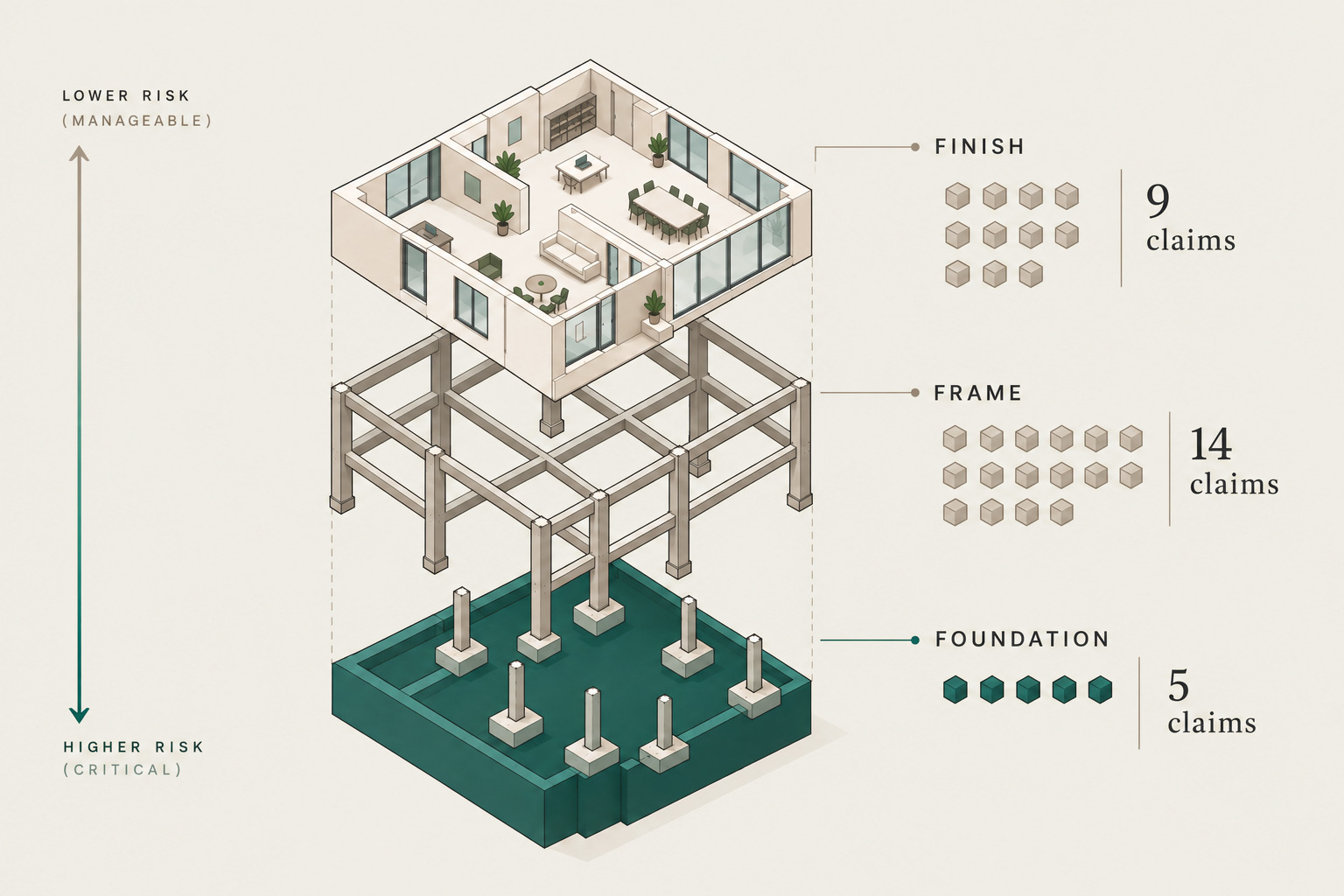
Building customer evidence infrastructure
Seventy people making product decisions, one researcher, and nothing connecting what any of them learned. I built the layer underneath: a repository that reached 70% of a 1,600 person company, a Dovetail to Databricks transcript pipeline, and MCP connections that surfaced customer evidence inside Claude, Figma, and Maze. What one team learned started reaching the others without anyone going looking.
The situation
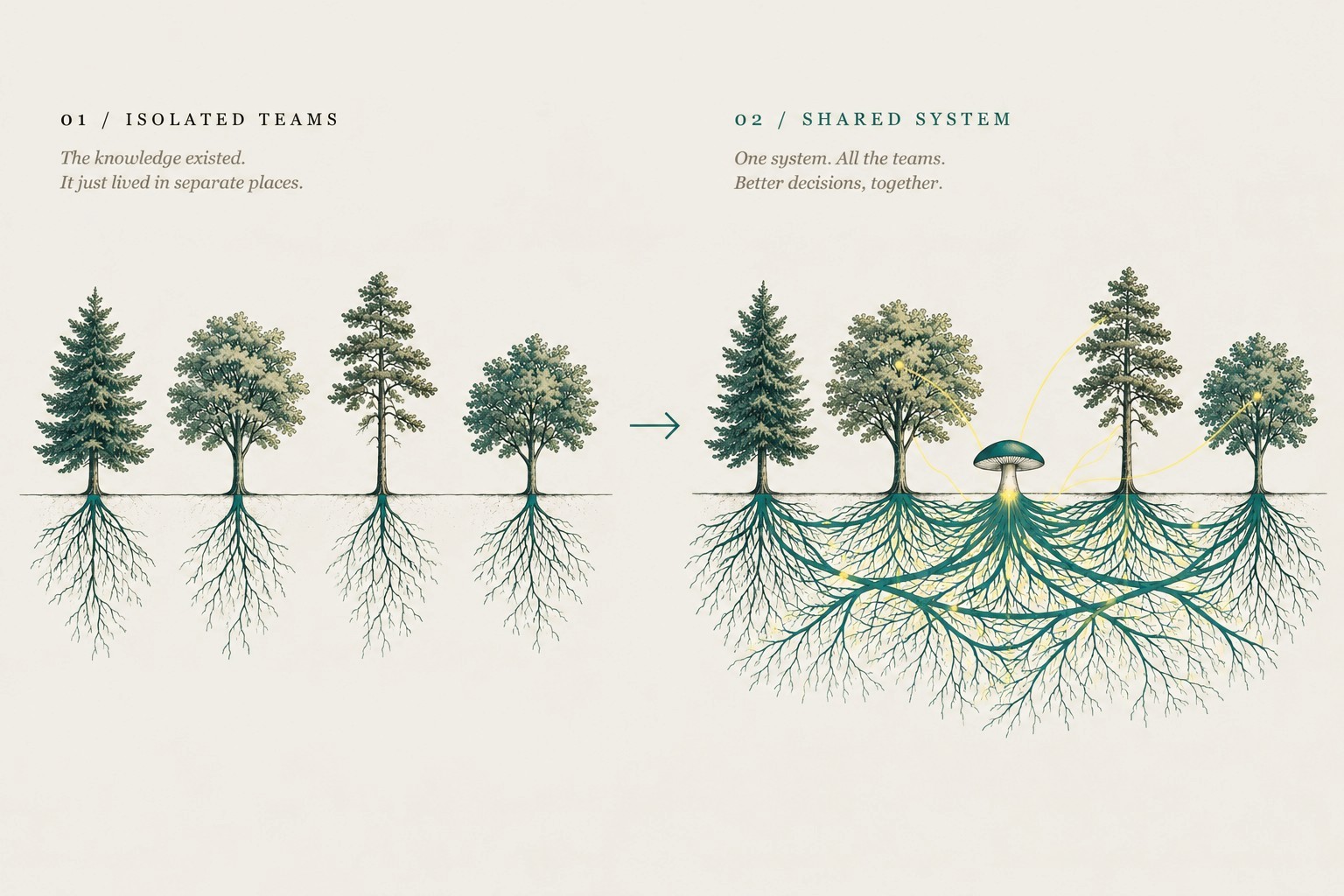
Plenty of trees. No forest.
BambooHR had roughly 70 front-line designers and PMs making product decisions every day, and one researcher. Teams were trying to understand their customers and each was doing it alone. Studies stayed wherever the person who ran them left them. Whether a finding reached a decision came down to who remembered it and who happened to be in the room. Two teams would recruit the same customers in the same month without knowing it.
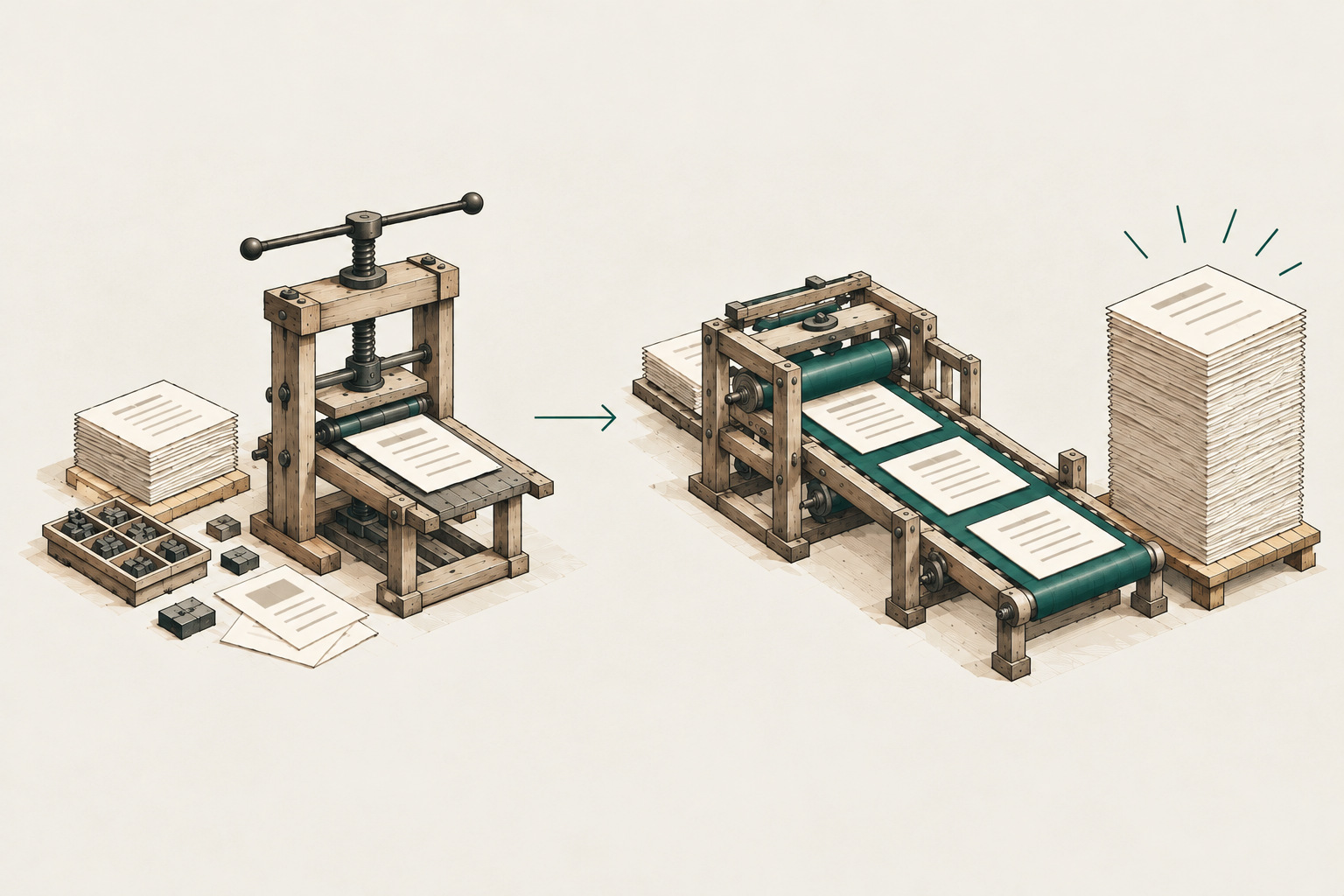
I never tried to serve that as a request queue, because the math is obvious: a study I ran personally would serve one team, once, and the finding would die in a Slack thread two weeks later. One researcher running a service model for 70 people is a bottleneck with a job title.
The throughput problem was the visible one. The deeper problem was that evidence was absent at the moment decisions got made. A designer deciding how a screen should work at 2pm on a Tuesday was not going to go dig through an archive first, and there was functionally no archive to dig through. Old studies sat in UserTesting and were never opened again. Recordings lived on individual Google Drives.
The social cost was the telling part. People skipped research to avoid the headache of running it, and to avoid looking like they did not already know the answer. When research is slow and asking for it signals uncertainty, the rational move for an individual is to not ask. Blaming individuals misreads it. The system produces that behavior, and better reports will not change the system.
How I framed it
In a forest the trees are the part you can see, and they are not the part doing the work. Underneath, root systems and mycorrhizal fungi move nutrients and chemical signals between trees that never touch. A tree benefits from what a tree fifty feet away already encountered.
That underground layer is what I set out to build. Not a better archive, which is just a taller tree. Something beneath the teams that moved evidence between them without anyone having to go looking for it.
In practice that meant reframing the job from producing insights to making evidence retrievable at the point of decision. A well-written report is a dead end. A searchable, connected, queryable corpus is infrastructure.
Three requirements fell out of that framing:
- Evidence has to live in one place with consistent structure, or it can't be found.
- It has to be reachable from the tools people already work in, or it won't be.
- It has to be traceable back to a source, or nothing distinguishes evidence from assertion.
The third one carried the most weight, and it is the opposite of what people assume. The risk in a fast-moving product org is false confidence more than distrust. Without traceability, a JTBD written by a PM reads as rigorous user-centered work whether or not a user ever informed it, and both land the same way in a review. Traceability is the only thing that makes the difference between a finding and a hunch visible at all.
What I built
The repository. Launched the company research repository with a consistent structure for studies, findings, and raw evidence. Reached 70% active use across 1,600 employees and became one of the most widely adopted AI tools in Product and Marketing.
That 70% is monthly active users from the repository's own analytics, measured against all 1,600 employees, a wider denominator than the product org. CX, Sales, Marketing, PMM, and IT were all referencing customer evidence in it. It also undercounts, because it only captured people opening the tool directly and missed API and MCP traffic, which for Product and Design had become the normal route in my last three to six months. The heaviest users were the least likely to show up in the number.
The pipeline. Shipped a v0 connection from Dovetail to Databricks, moving call transcripts into the company's data environment so customer voice sat alongside product and usage data instead of in a separate silo. Transcripts only, manually searchable, in progress when the research function was cut.
The connections. Set up MCP and API access so Claude, ChatGPT, Figma, and Maze could pull customer evidence inline. This is the part that mattered most.
The moment I point to: a designer working in Figma pulled from interviews their PM had run days earlier and made live design decisions off them. They had not been in the room for those conversations and did not ask anyone for a summary. The evidence was simply there, in the tool, at the moment they needed it.
That is the thesis in a single interaction. Nobody filed a request, nobody waited two weeks, no researcher was in the loop, and the decision was still grounded in what customers had actually said.
Key decisions and tradeoffs
Chose adoption over rigor at the entry point. Making it easy to contribute meant accepting variation in quality. Quality control went downstream, into standards and review. Gatekeeping upstream was the other option, and it makes the researcher the bottleneck again. An unused system is worth nothing regardless of how good it is, so engagement came first every time.
Dovetail’s tagging and highlighting are how you get clean, queryable data, and almost nobody used them. Tagging felt manual and overwhelming, so people skipped contributing instead of posting something untagged. I told them to stop tagging. Get the recording in, add a short bullet list of what you did with it, let AI draft the list, move on. Contribution cost dropped to nothing and the corpus started growing.
The bet was that cleanup is solvable later through the API and MCP layer, and an empty repository is not solvable at all. The cleanup layer never materialized, because the hiring never came and then the function was cut. The sequencing was still right. A messy corpus people use can be cleaned. A pristine one nobody contributes to is an empty database with good manners.
Chose connections over a destination. People do not visit research portals. The connections into Figma, Maze, and the AI tools were more work and less visible, and they are the reason it got used.
Shipped v0 of the pipeline without waiting for the full version. Transcripts only, manual search. Incomplete and in use, against a complete design that existed in a doc.
What came of it
The system became the company’s voice of the customer layer, and it arrived just in time to matter structurally.
As the company moved toward AI-assisted development, including an internal platform where teams composed their own discovery-to-shipped-PR pipelines, those pipelines needed a customer evidence source. Without the repository and the transcript pipeline feeding it, the available inputs would have been sales calls and support tickets.
That substitution is a strategy problem disguised as a data problem. Sales calls tell you what a prospect says to get a discount. Support tickets tell you what broke. Neither tells you what the job was, why someone chose a workaround, or what they expected the product to do. A pipeline fed on that produces confident, well-formatted, systematically skewed output at speed, with nobody checking the source. The faster the pipeline, the worse the damage.
The thing I would point at, if I had to point at one: a pattern surfacing in support conversations could reach a designer who had never read a support ticket. Teams stayed independent and stopped being isolated. That is the whole difference between a stand of trees and a forest.
What I'd do differently
I would check for leadership demand before taking the job.
A research system competes against incentives more than against ignorance. If the people making product decisions are not expected to show where those decisions came from, every hour spent on discovery is an hour not spent shipping, and shipping is what gets recognized. When clarity and speed conflict, speed wins, and the person who moved fast on a thin basis looks like the high performer.
I built the system and I enabled people to use it. Changing what an organization rewards sits outside what any individual contributor can do. I spent real effort on internal selling, and internal selling loses to an incentive.
What I would establish now, before accepting a role, is whether leaders already ask the question. How do we know this is a problem? What is our hypothesis for why it is happening, and what did we do to test it? Where a director asks that routinely, a research system compounds. Where nobody asks it, the best system in the world produces artifacts nobody is accountable for using. That is the screen I apply to research leadership roles now.